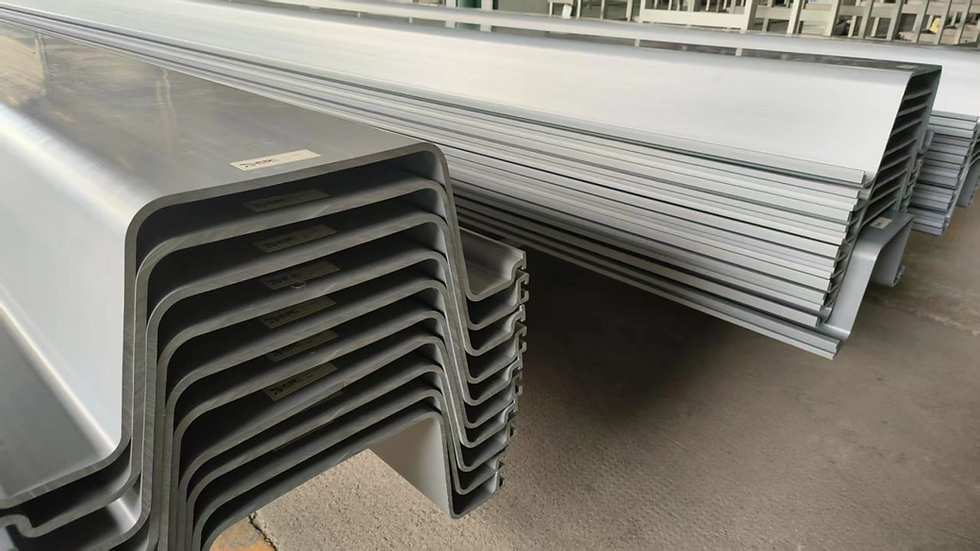
Aluminum Steel Framed Trench Shields: Balancing Strength, Weight and Jobsite Handling

Trench excavation requires protective equipment that can meet demanding site conditions while remaining practical to transport, position, install, and relocate.
Aluminum steel framed trench shields provide an alternative configuration for excavation projects where equipment weight, structural performance, mobility, and jobsite efficiency must all be considered. They can be particularly useful for utility installation, maintenance, repair, and linear excavation work where trench protection may need to be repositioned frequently as work progresses.
Rather than selecting a trench shield based on weight or material alone, contractors should evaluate the complete excavation conditions, available lifting equipment, required working space, and the manufacturer's tabulated data.
What Is an Aluminum Steel Framed Trench Shields?

An aluminum steel-framed trench shield is a protective excavation system designed to help protect workers operating within a trench.
Unlike conventional all-steel trench shields, aluminum steel framed shields use a hybrid construction intended to balance reduced equipment weight with the structural requirements of trench protection applications.
Depending on the specific shield design and configuration, key considerations may include:
Reduced overall equipment weight
Efficient transportation and handling
Practical installation and removal
Easier repositioning along linear excavations
Compatibility with available lifting equipment
Structural performance appropriate for the specified application
Exact construction, dimensions, weight, allowable depth, and configuration requirements should always be confirmed using the manufacturer's current tabulated data and engineering documentation.
ESC's trench protection range includes steel trench shields, aluminum steel framed shields, aluminum trench shields, manhole trench boxes, modular trench boxes, trench sheets, spreader solutions, and trench safety accessories.
Why Weight Matters in Trench Shield Selection
Trench shield weight directly influences lifting requirements, transportation, installation, repositioning, and overall jobsite efficiency.
For utility work and linear excavations in particular, the shield may need to be moved repeatedly as excavation, installation, and backfilling progress along the alignment. A lighter system may allow the site's available excavator or lifting equipment to handle and reposition the shield more efficiently.
However, the lightest trench shield is not automatically the right trench shield.
Selection should consider the complete excavation conditions, including:
Trench depth, width, and length
Soil classification and stability
Groundwater conditions
Adjacent structures
Surface loads and obstructions
Overhead restrictions
Excavation geometry
Required working clearance
Available excavator or crane capacity
Manufacturer's tabulated data
These factors should be assessed together when determining the most appropriate trench protection system for a project.
Aluminum vs. Steel vs. Aluminum Steel Framed Trench Shields
There is no single trench shield material or configuration that is ideal for every excavation. The appropriate choice depends on the project requirements, excavation conditions, available equipment, and system-specific engineering data.
Aluminum Trench Shields
They can provide a practical trench protection solution for utility contractors, municipalities, maintenance crews, and construction teams working on projects where equipment capacity or frequent shield repositioning must be considered.

Their relatively lightweight construction can make them well suited to certain utility, repair, maintenance, and excavation applications.
The appropriate allowable depth and configuration should always be determined from the tabulated data for the specific shield.
Steel Trench Shields
ESC's steel trench shield range features heavy-duty construction, including fully welded panels and fixed or adjustable spreaders. Available configurations can accommodate different excavation dimensions and jobsite requirements.

Because steel trench shields can be considerably heavier than lighter alternatives, contractors should consider the lifting capacity and operating limits of their excavator or crane when planning shield installation and repositioning.
Aluminum Steel Framed Trench Shields
Aluminum steel framed trench shields provide another option between conventional aluminum and all-steel trench shield systems.
This configuration can be particularly relevant when contractors are evaluating shield weight, transportation, lifting requirements, handling efficiency, excavation conditions, and required shield capacity together.

Rather than assuming that one material or construction type provides greater capacity, contractors should compare the manufacturer's tabulated data, shield dimensions, weight, allowable depth, and required configuration for the specific excavation.
The final selection should always be based on project conditions and engineering requirements rather than material type alone.
Where Are Aluminum Steel Framed Trench Shields Used?
Aluminum steel framed trench shields can be considered for many types of utility and civil excavation work, including:
Water and sewer installation
Drainage works
Utility maintenance and repair
Gas utility trenches
Electrical utility installation
Pipeline projects
Municipal infrastructure improvements
Road and civil construction
General trench excavation
They can be particularly useful where excavation progresses continuously along a linear alignment.
For example, during water, sewer, drainage, or pipeline installation, excavation, pipe placement, backfilling, and trench shield repositioning may occur repeatedly as crews move along the alignment.
In these situations, shield weight and compatibility with the site's available lifting equipment can directly affect workflow and productivity.
Trench Shielding Is Only One Part of Excavation Safety
A trench shield is designed primarily to protect workers within the shielded working area in the event of surrounding soil movement or collapse. It should not be assumed to support or prevent movement of the trench walls in the same manner as an engineered shoring system.
Before excavation begins, soil conditions, trench geometry, groundwater, surcharge loads, adjacent structures, access requirements, overhead restrictions, and the proposed protective system should all be evaluated.
In the United States, excavation safety requirements are addressed under OSHA 29 CFR Part 1926 Subpart P. ESC trench shields are designed and manufactured in accordance with applicable OSHA excavation provisions, with third-party product certification available for the product range.
The manufacturer's tabulated data, allowable depth, approved configurations, assembly requirements, and installation instructions should therefore be reviewed as part of excavation planning.
Choosing the Right Trench Shield for Your Excavation
Before requesting a trench shield quotation, providing accurate project information can help identify a system that is better suited to the actual excavation conditions.
1. Excavation Depth
The maximum anticipated trench depth is a fundamental consideration because the selected shield and configuration must be appropriate for the planned excavation.
2. Trench Width and Working Clearance
The shield must provide sufficient working space for personnel and installation activities while remaining appropriate for the excavation geometry.
Consider both the external excavation dimensions and the internal clear working width required for the project.
3. Soil Conditions
Soil classification and stability can significantly influence excavation planning and the protective system required.
Under OSHA requirements, soil conditions are an important consideration when determining an appropriate protective system.
4. Groundwater Conditions
Water can significantly affect excavation conditions.
Existing groundwater, surface-water infiltration, drainage, and dewatering requirements should therefore be identified during planning.
5. Adjacent Loads and Structures
Nearby buildings, roads, traffic, construction equipment, stockpiled materials, utilities, and other surcharge loads can influence excavation conditions and should be considered during planning.
6. Utility or Structure Being Installed
The type and dimensions of the infrastructure being installed affect the working area required inside the shield.
For example, pipe diameter, couplings, manholes, drainage structures, valves, and other components may influence the required internal clearance.
7. Available Lifting Equipment
The size and lifting capacity of the excavator, crane, or other lifting equipment should be considered alongside the shield's dimensions and weight.
A shield that cannot be handled safely and efficiently by the available equipment can create unnecessary operational challenges.
Providing these details early allows the trench shield supplier to evaluate a configuration that better reflects the project's actual requirements.
Why Work With a Specialist Trench Shield Manufacturer?
A trench shield should not be selected based on dimensions and price alone.
Engineering documentation, tabulated data, available configurations, spreader options, replacement components, accessories, product support, and manufacturer technical information may all become important once the equipment reaches the field.
ESC provides a broad trench protection range that includes:
The ESC trench shield range for the North American market is designed for U.S. and North American construction practices, with products verified and certified by a third-party professional engineer in the United States.
This wider product range allows contractors to evaluate trench protection based on actual project conditions rather than trying to apply one type of trench box to every excavation.
Find the Right Aluminum Steel Framed Trench Shield
Selecting the right trench shield starts with understanding the excavation, not simply choosing a standard box size.

Consider the trench depth and width, soil conditions, groundwater, surrounding loads, required working clearance, installed utility, jobsite restrictions, and available lifting equipment before selecting a system.
For project-specific requirements, ESC Trench Shoring can help evaluate an appropriate aluminum steel framed trench shield based on the excavation requirements and applicable product data.
Planning an excavation?