


Are Vinyl Sheet Piles Good for Seawalls?

Choosing the right sheet piling for a seawall depends on durability, site conditions, maintenance requirements and long-term performance. For waterfront projects where corrosion is a concern, vinyl sheet piles offer a durable alternative to traditional steel and timber systems.
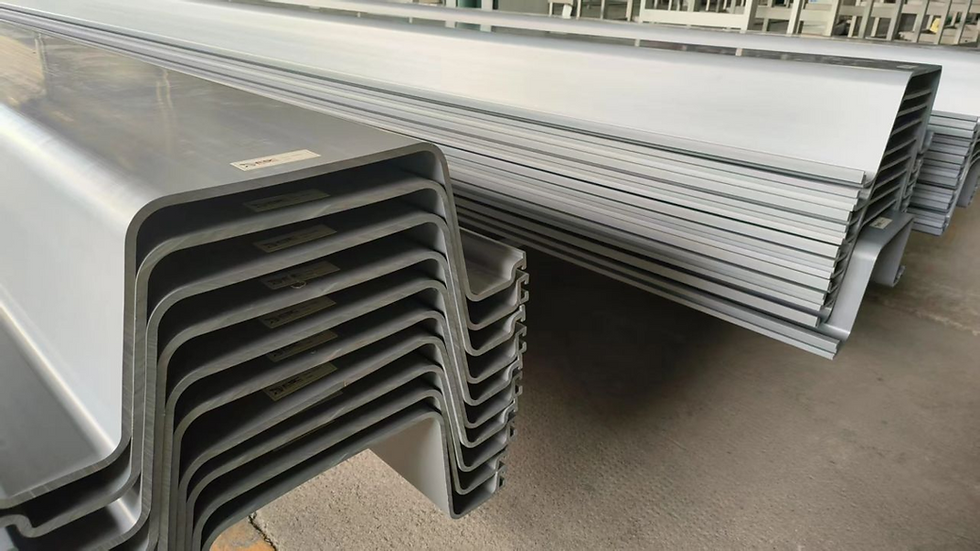
Manufactured from PVC, vinyl sheet piles connect through interlocking edges to create a continuous retaining wall. The material does not rust or rot, while its relatively lightweight construction can simplify transportation, handling and installation under suitable site conditions.
However, seawall performance depends on more than material selection. The sheet pile profile, installation depth, anchoring and structural design must be appropriate for the soil conditions, water exposure and loads acting on the wall.
Why Choose Vinyl Sheet Piles for Seawalls?
The primary advantage of a vinyl sheet pile seawall is corrosion resistance. Unlike steel, PVC does not depend on protective coatings to prevent rust. It also avoids the decay commonly associated with timber in wet environments.
This can reduce the need for repainting, recoating and corrosion-related repairs throughout the service life of the structure. Vinyl sheet piling is therefore commonly considered for:
A complete seawall system may also require tie rods, anchors, a cap beam, drainage and filter fabric. The final configuration should be based on the conditions and structural requirements of the project.
How Long Does a Vinyl Seawall Last?
The service life of a PVC seawall depends on the specific product, PVC formulation, UV resistance, installation quality and site exposure. Always refer to the manufacturer’s technical data for the stated design life and material performance.
Although vinyl does not corrode, the seawall can still be affected by excessive loading, poor installation, abrasion, floating debris or physical damage. Before selecting a product, review its material properties, UV stabilization and published technical data.
Proper design and installation are just as important as the durability of the material itself.

Vinyl Sheet Pile Installation and Embedment Depth
There is no standard installation depth suitable for every vinyl seawall.
The required embedment depends on several project-specific factors, including:
Wall height
Soil strength
Groundwater conditions
Water-level differences
Earth and hydrostatic pressure
Wave exposure
Structural and surcharge loads
The sheet piles must extend far enough below the retained soil or seabed to resist the pressure acting on the wall.
For example, a small retaining wall around a sheltered pond will have different requirements from a coastal seawall exposed to tides, waves and soft marine soils. More demanding conditions may require deeper embedment, additional anchoring or a reinforced wall system.
Installation depth should therefore be established through an appropriate geotechnical and structural assessment rather than a general rule of thumb.
What Keeps a Vinyl Seawall Stable?
For taller walls or heavily loaded sites, tie rods may be connected to ground or deadman anchors behind the wall. A cap beam may also be installed to align the sheet piles, distribute loads and improve the overall integrity of the structure.
Ground conditions are equally important. Weak soils, toe erosion, scour and soil loss can undermine an otherwise correctly installed seawall. Sites exposed to strong wave action, coastal conditions or heavy surcharge loads may require a more heavily supported design or an alternative seawall solution.

Are Vinyl Sheet Pile Seawalls Low Maintenance?
Vinyl seawalls generally require less routine maintenance than steel or timber systems because PVC does not rust, rot or require regular anti-corrosion coating.
However, a vinyl seawall should not be considered completely maintenance-free. Periodic inspections should check for:
Sheet pile movement
Damaged or separated interlocks
Toe erosion and scour
Loss of retained soil
Drainage problems
Damage to anchors, tie rods or caps
Additional inspections are advisable after storms, flooding or significant wave events. Identifying small problems early can help prevent more extensive and expensive repairs.
Vinyl Sheet Pile Project Applications
Vinyl sheet piling can be adapted for various shoreline protection, flood-control and water-management applications. The following projects demonstrate how the system has been used under different site conditions.
Shoreline Protection in the Seychelles
ESC vinyl sheet piles were installed as a shoreline protection system in the Seychelles. The installation created a continuous retaining barrier while maintaining a clean appearance appropriate for the coastal setting.

Waterfront Retaining Wall in Indonesia
ESC vinyl sheet piles were installed using an excavator-mounted vibratory hammer with assistance from a steel mandrel. The interlocking sheets formed a continuous waterfront retaining wall.

Flood Protection Wall in Malaysia
ESC vinyl sheet piles were used to construct a continuous flood protection wall designed to help protect the property from potential flooding.

Stormwater Pond Stabilization in Wilmington, North Carolina
USA-manufactured PESC-24-9.0 vinyl sheet piles were installed in 10-foot and 18-foot lengths to stabilize the edges of a stormwater retention pond and forebay. ESC-290 vinyl caps were added to provide a clean, finished appearance.

Is Vinyl Sheet Pile Right for Your Seawall?
Vinyl sheet piling can be an effective solution where corrosion resistance, durability and reduced routine maintenance are priorities. Its suitability, however, depends on the actual project conditions.
Before selecting a system, consider:
Soil profile and ground conditions
Water levels and groundwater pressure
Required wall height
Embedment depth
Wave, current and tidal exposure
Structural and surcharge loads
Anchoring and cap-beam requirements
Drainage and erosion control
The best results come from matching the vinyl sheet pile profile and support system to the site rather than choosing panels based only on price or dimensions.


Planning a Seawall or Shoreline Protection Project?
Talk to ESC about your seawall, shoreline protection, flood protection or waterfront retaining wall project. The project details can be reviewed to help identify suitable vinyl sheet pile profiles, installation methods and support arrangements for long-term performance.
Email: info@escpvcsheetpiling.com